

The report on the state of recreational marine fishing in Catalonia in 2024 is now available

Recreational marine fishing in Catalonia is growing in participation but reducing total catches in 2024.

The latest ICATMAR report on the state of recreational marine fishing in Catalonia shows an increase in the number of recreational fishers in 2024, with an estimated 52,200 participants, representing a 6.7% growth compared to the average for the 2020–2023 period. Despite this rise in participation, the study indicates a decrease in the total extracted biomass, which drops from an estimated 940 tonnes per year in 2020–2023 to approximately 851 tonnes in 2024.

The report confirms that recreational marine fishing continues to be a highly seasonal activity, concentrated mainly between May and September. However, in 2024 there was an increase in activity during the winter months, particularly in boat fishing and spearfishing.

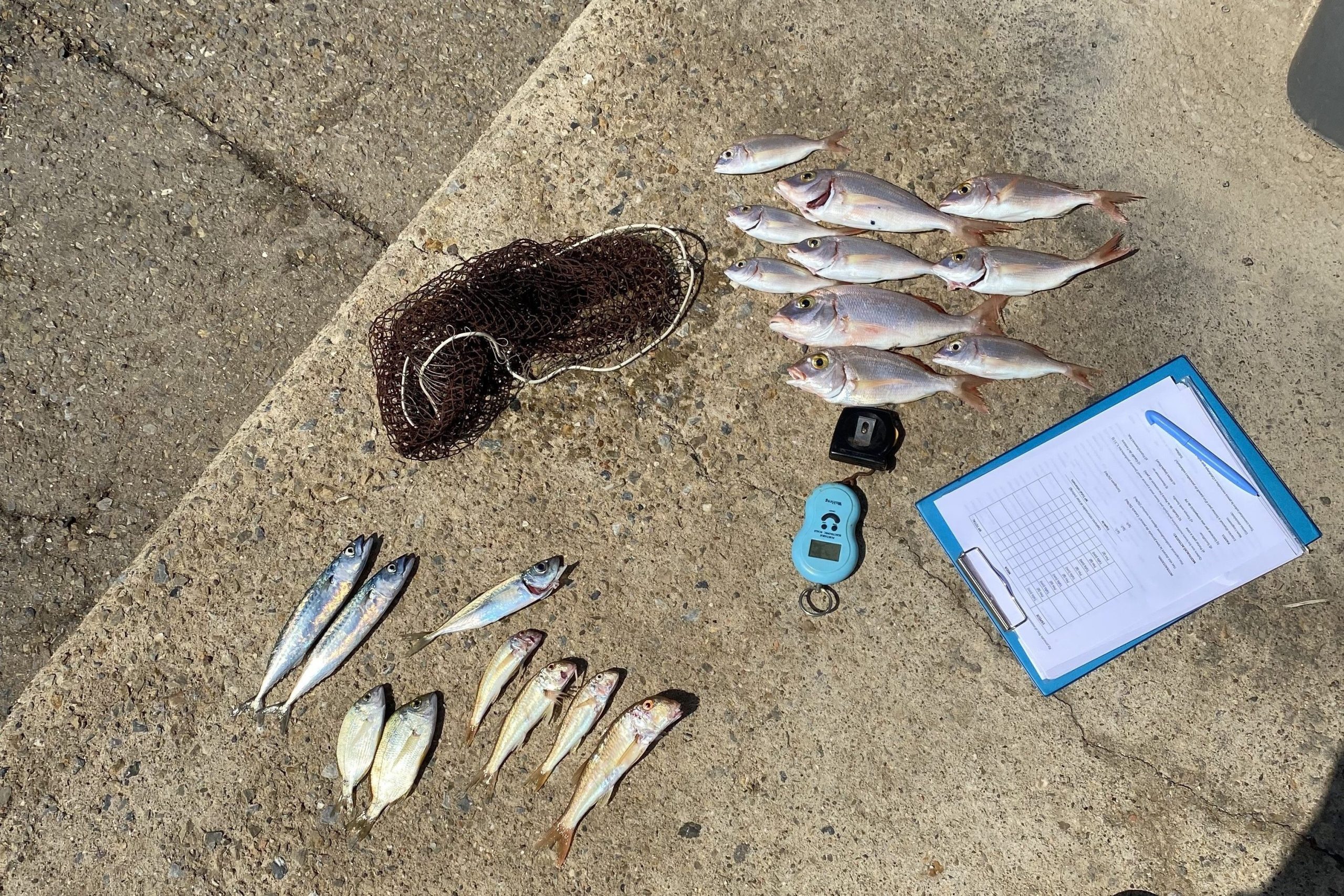
Regarding catches, species from the sparid family, such as gilthead seabream (Sparus aurata) and seabreams (Diplodus spp.), remain the main target group for recreational fishing. Each fishing modality, however, shows distinct patterns:

  • Shore angling focuses mainly on gilthead seabream, seabreams, and European seabass (Dicentrarchus labrax).
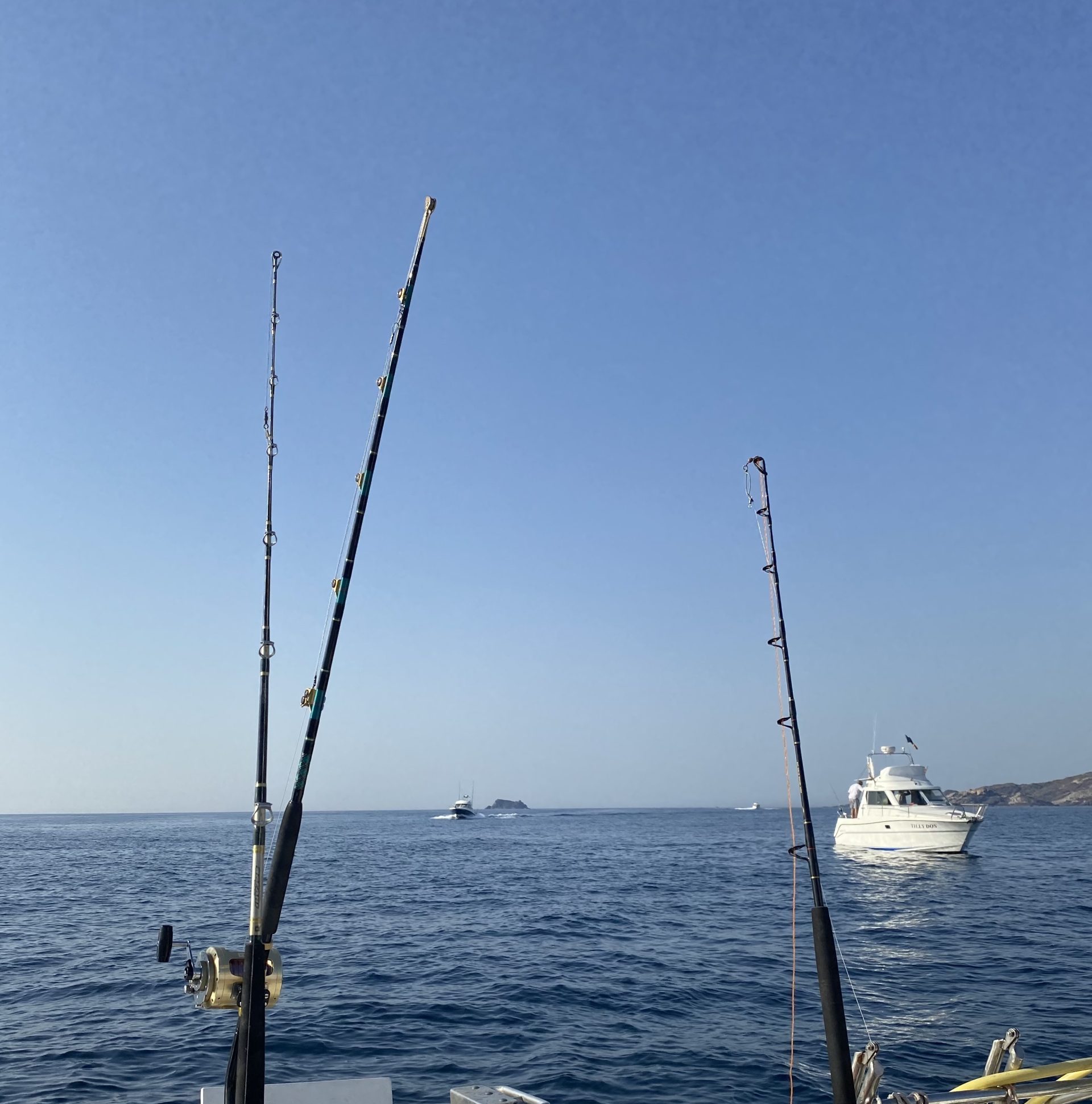
  • Boat angling stands out for the capture of pelagic fish such as little tunny (Euthynnus alletteratus) and cephalopods such as cuttlefish (Sepia officinalis) and squid (Loligo vulgaris).
  • Spearfishing maintains a significant presence of species such as dusky grouper (Epinephelus marginatus) and common octopus (Octopus vulgaris), in addition to sparids.

Overall, in 2024 a reduction in catches was observed in boat angling and spearfishing, while shore angling shows slight increases in some coastal areas.

The data also reveal that most recreational catches continue to be retained, with percentages close to 88%, and that catch-and-release practices still have a very limited presence. These results reinforce the importance of considering recreational fishing in stock assessments and fisheries management, especially in the context of marine resource sustainability.

Finally, ICATMAR highlights that five consecutive years of data collection have made it possible to consolidate a robust time series on recreational marine fishing in Catalonia. This continuity is key to improving the reliability of estimates and advancing towards informed decision-making based on co-management and the integration of recreational fishing into marine governance policies. The full report is available at this link or in the publications section.


Source: Marta Pujol Baucells

Key resolution approved for the regulation of Marine Recreational Fishing in Catalonia

The new regulation establishes, among other measures, minimum catch sizes, maximum daily catch quotas, and biological closed seasons for certain species.

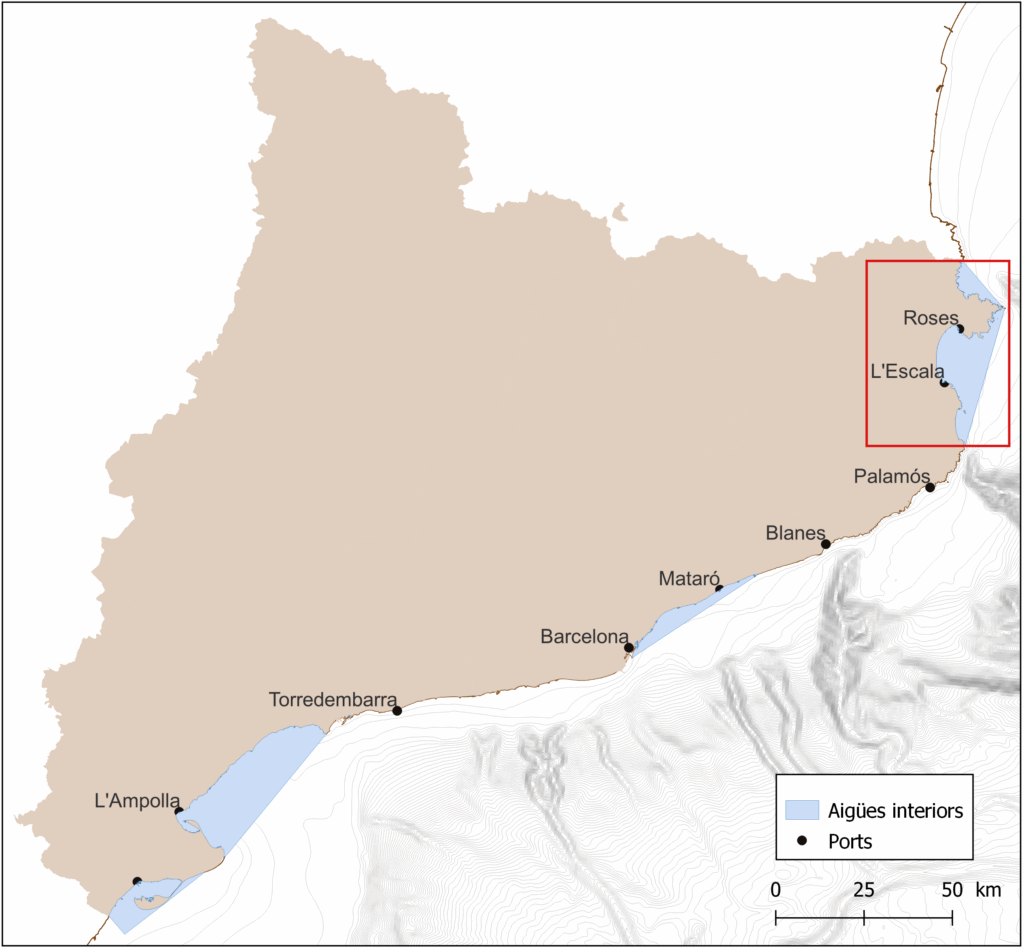
Inland waters of Catalonia. The area highlighted within the red box corresponds to the zone regulated by Resolution ARP/3253/2024.

On September 10, 2024, a key resolution (Resolució ARP/3253/2024) was approved for the regulation of Marine Recreational Fishing (hereinafter, MRF) in Catalonia. This resolution, applicable to the inshore waters along the Girona coastline, aims to ensure the sustainability of fishery resources and the marine ecosystem. The new regulation, subject to revision every two years, establishes, among other measures, minimum catch sizes, maximum daily catch quotas, and biological closed seasons for certain species. Its approval was made possible thanks to the effort and close collaboration between the different parties involved in the MRF Co-management Board, in which ICATMAR contributes scientific data obtained through MRF monitoring in Catalonia. Looking ahead, work is underway on a new resolution for the rest of Catalonia’s inshore waters and on the update of Decret 109/1995, which currently regulates the activity.

MRF is an important activity in Catalonia. Among its three main forms, i.e., boat angling, shore angling, and spearfishing, more than 50,000 licenses are issued annually throughout the region. However, until now, MRF in Catalonia was only regulated by a Decree published in 1995, which, for the first time, established the requirement for a license and a daily weight limit, among other general regulations. Nevertheless, the significant increase in the practice of this activity over recent decades, changes in regulations, and requirements from the European Union have made it necessary to address the governance of this sector through various mechanisms. On the one hand, the implementation and consolidation of the MRF monitoring program conducted by ICATMAR since 2020 has been promoted; on the other, new regulations are being developed to update current rules and ensure sustainable and adapted management.

Recreational fishers practicing shore angling.

To move the resolution forward, the intensive work carried out within the framework of the MRF Co-management Board was essential, as was the achievement of consensus among all stakeholders involved. The Co-management Board was established in 2023 and includes the different sectors involved in MRF, specifically, associations of recreational fishers of the different modalities, the Government of Catalonia, the NGO WWF, and the scientific community through ICATMAR. With the goal of providing a scientific basis for developing proposals for the resolution, ICATMAR drafted the report Indicadors biològics per determinar possibles mesures de gestió de la Pesca Marina Recreativa a Catalunya. Based on data collected between 2020 and 2023 in northern Catalonia and on scientific literature, the report proposed management measures for 46 MRF target species. Among the various proposals were minimum catch sizes, biological closed seasons, and bag limits. These measures, after being revised and agreed upon by all parties, were ultimately included in the Resolution. The approach adopted, which combines scientific knowledge with active participation and regular review of the measures, aligns with an adaptive management model and is designed to adjust regulations based on changes in both activity and ecosystems.

Currently, the Co-management Board is finalizing the last details of a new Resolution to regulate MRF in the inshore waters of the central and southern areas of Catalonia. In this way, the entire Catalan coastline will be subject to the new Resolutions. In parallel, the MRF Co-management Board is also working to update the contents of Decret 109/1995, which governs this activity in Catalonia. This Decree is considered obsolete, as the guidelines it contains were drafted 30 years ago and do not take into account the significant changes in MRF practices and European regulations that have occurred in recent decades. A Decree holds a higher regulatory status than a Resolution, and for this reason, it is important to amend the current Decree to ensure the continuity of the new measures implemented.

Author: Ferran Bustos

The report on the state of marine recreational fisheries in Catalonia in 2023 is now available

You can now download the report State of Marine Recreational Fisheries in Catalonia 2023 in the Publications section

Marine recreational fishing is a non-professional activity practiced for leisure by approximately 350 million people worldwide. Despite being one of the most popular coastal leisure activities globally, there is a historical lack of knowledge about its impacts, as well as a general lack of data collection, sampling and assessment systems for the activity. For this reason, ICATMAR launched a continuous monitoring program for marine recreational fisheries in Catalonia in 2020. The goal of the program is to compile a time series of data on catches and species records to provide a reliable and robust information source for decision-making in potential management strategies.

In this report, which you can download from the Publications section, the results of the continuous monitoring of marine recreational fisheries in Catalonia conducted by ICATMAR during 2023 are presented, comparing them with the period 2020-2022. In the different sections, you will find, among others, indicators for the different fishing modalities practiced in the region, namely shore angling, boat angling, and spearfishing. Additionally, you can also download a drop-down summary with the main results of the report in Catalan.

Source: Marta Pujol-Baucells