

The new regulation establishes, among other measures, minimum catch sizes, maximum daily catch quotas, and biological closed seasons for certain species.
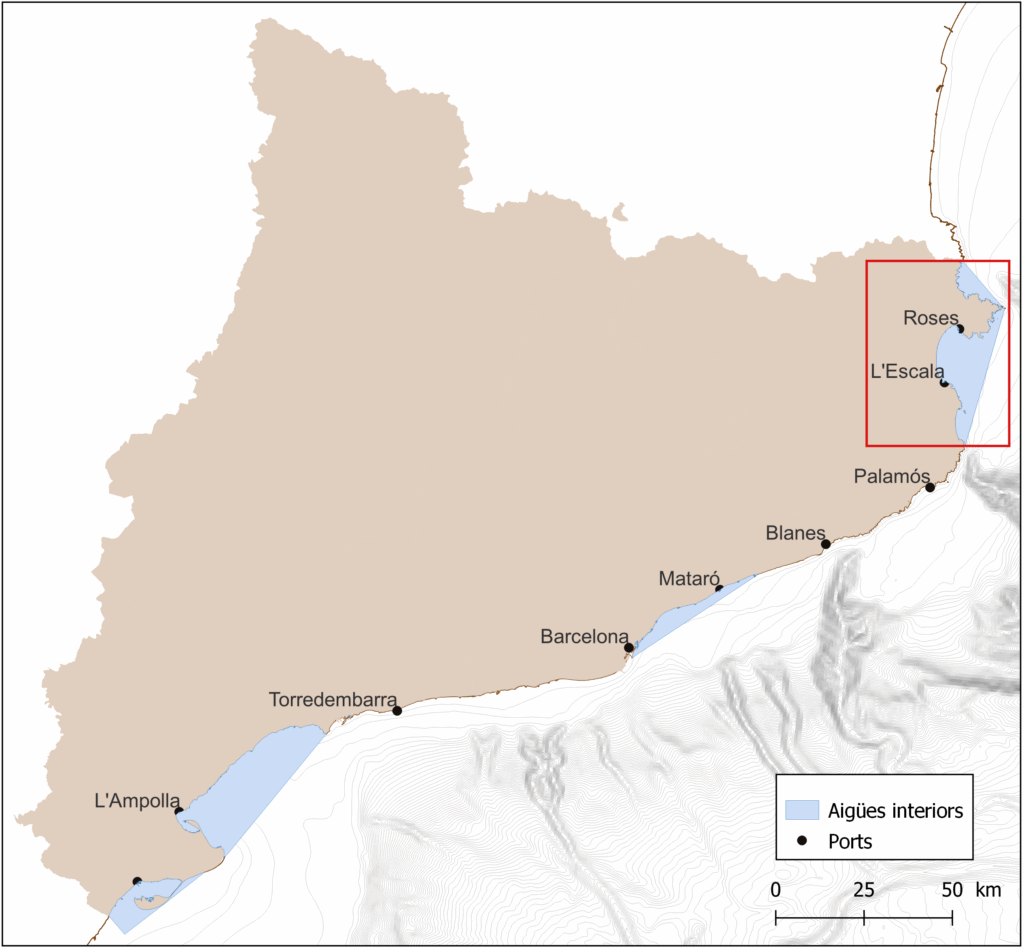
On September 10, 2024, a key resolution (Resolució ARP/3253/2024) was approved for the regulation of Marine Recreational Fishing (hereinafter, MRF) in Catalonia. This resolution, applicable to the inshore waters along the Girona coastline, aims to ensure the sustainability of fishery resources and the marine ecosystem. The new regulation, subject to revision every two years, establishes, among other measures, minimum catch sizes, maximum daily catch quotas, and biological closed seasons for certain species. Its approval was made possible thanks to the effort and close collaboration between the different parties involved in the MRF Co-management Board, in which ICATMAR contributes scientific data obtained through MRF monitoring in Catalonia. Looking ahead, work is underway on a new resolution for the rest of Catalonia’s inshore waters and on the update of Decret 109/1995, which currently regulates the activity.
MRF is an important activity in Catalonia. Among its three main forms, i.e., boat angling, shore angling, and spearfishing, more than 50,000 licenses are issued annually throughout the region. However, until now, MRF in Catalonia was only regulated by a Decree published in 1995, which, for the first time, established the requirement for a license and a daily weight limit, among other general regulations. Nevertheless, the significant increase in the practice of this activity over recent decades, changes in regulations, and requirements from the European Union have made it necessary to address the governance of this sector through various mechanisms. On the one hand, the implementation and consolidation of the MRF monitoring program conducted by ICATMAR since 2020 has been promoted; on the other, new regulations are being developed to update current rules and ensure sustainable and adapted management.

To move the resolution forward, the intensive work carried out within the framework of the MRF Co-management Board was essential, as was the achievement of consensus among all stakeholders involved. The Co-management Board was established in 2023 and includes the different sectors involved in MRF, specifically, associations of recreational fishers of the different modalities, the Government of Catalonia, the NGO WWF, and the scientific community through ICATMAR. With the goal of providing a scientific basis for developing proposals for the resolution, ICATMAR drafted the report Indicadors biològics per determinar possibles mesures de gestió de la Pesca Marina Recreativa a Catalunya. Based on data collected between 2020 and 2023 in northern Catalonia and on scientific literature, the report proposed management measures for 46 MRF target species. Among the various proposals were minimum catch sizes, biological closed seasons, and bag limits. These measures, after being revised and agreed upon by all parties, were ultimately included in the Resolution. The approach adopted, which combines scientific knowledge with active participation and regular review of the measures, aligns with an adaptive management model and is designed to adjust regulations based on changes in both activity and ecosystems.
Currently, the Co-management Board is finalizing the last details of a new Resolution to regulate MRF in the inshore waters of the central and southern areas of Catalonia. In this way, the entire Catalan coastline will be subject to the new Resolutions. In parallel, the MRF Co-management Board is also working to update the contents of Decret 109/1995, which governs this activity in Catalonia. This Decree is considered obsolete, as the guidelines it contains were drafted 30 years ago and do not take into account the significant changes in MRF practices and European regulations that have occurred in recent decades. A Decree holds a higher regulatory status than a Resolution, and for this reason, it is important to amend the current Decree to ensure the continuity of the new measures implemented.
Author: Ferran Bustos